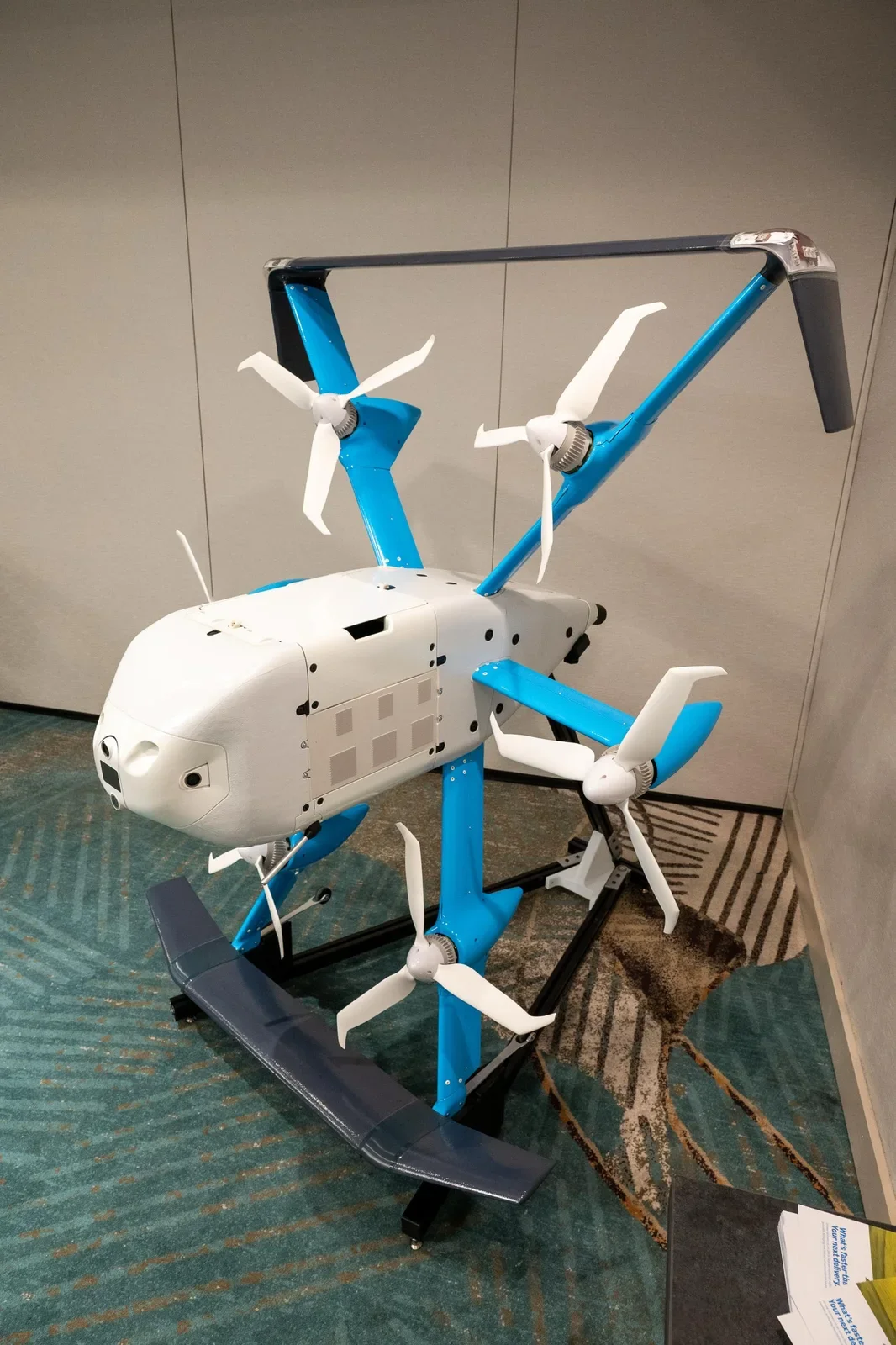
A new kind of traffic overhead
Amazon's MK30 delivery drones are six-propeller, 5-by-5-foot machines that are capable of reaching 75 miles per hour. They are designed to carry shoebox-sized packages weighing up to five pounds. During delivery, objects are dropped in a designated “delivery zone” from approximately 13 feet.
The Federal Aviation Administration (FAA) has allowed Amazon to make up to 1,000 deliveries per day, though the Amazon facility in Westborough would not have that capacity right away. Amazon shared that they are planning to start with six drones and expect to do hundreds of drone deliveries daily.
Operations are generally planned for daylight hours, running from roughly 15 minutes before sunrise to 15 minutes after sunset. Once an order is placed and approved, individual package deliveries are designed to take a 30 to 60 minute time frame.
Prime Air is already operating in more than 15 communities across the country. Amazon began Prime Air operations in Richardson, Texas in December 2025. Since then, residents have reported concerns about noise, frequency and flight paths. Some residents have described seeing or hearing drones repeatedly throughout the day, and city officials have received complaints from residents. In March 2026, Amazon announced operational adjustments in Richardson, including rerouting some flights, reducing certain overflights and increasing the average minimum altitude for outbound flights.
That experience raises an important question for the Westborough area: Why wait until after launch to discover what residents may experience?

Major concerns
Amazon says the MK30 is designed to be quiet and describes its sound as comparable to a residential HVAC unit under certain conditions. But the experience of a sound in a laboratory or technical measurement is not necessarily the same as experiencing repeated aircraft overhead in a neighborhood.
In Richardson, TX, residents have specifically raised concerns about the frequency and persistence of drone noise. A September 2026 report from CBS Texas documented residents describing drones as a frequent presence over their homes, with some reporting hundreds of flights a day in certain locations.
The question for our communities is not simply: “How loud is one drone?” It is: “What does repeated drone traffic sound like when it becomes part of everyday neighborhood life?” This is something residents deserve meaningful information about before operations begin.
Sound

Prime Air drones use cameras and other sensors as part of their navigation and obstacle-detection systems.
Amazon says its onboard cameras are used for navigation, are not monitored live by people, and that data collected during a delivery is used for safety purposes and to improve the customer experience. Amazon has also stated that its drones are not designed to track individuals or record their movements. Those are important assurances.
However, residents can reasonably ask:
What exactly is captured by onboard sensors?
How long is data retained?
Where is it stored?
Who can access it?
What happens when a drone passes over a property belonging to someone who is not an Amazon customer?
What independent oversight exists?
What process exists for residents who have privacy concerns?
Privacy questions should be answered before routine flights begin, not after.
Privacy

The potential impact of drone operations on property values is an important question that deserves careful study before flights begin.
There is substantial research showing that exposure to aircraft noise can affect residential property prices. A 2025 National Bureau of Economic Research study found that increases in aviation noise exposure were associated with reductions in home prices. That research concerns conventional aviation noise, not Prime Air specifically, so it cannot establish a particular percentage impact for Westborough area homes.
However, if commercial drone traffic becomes a persistent feature of a neighborhood, what effect could that have on residents' quality of life and, potentially, the desirability of affected properties?
We should have credible, location-specific information before operations begin.